LOGOLOGOLOGOLOGO
    • About us
      • What we do
      • Who we are
        • Governance
        • Staff
        • Vacancies
    • Members
      • EuropaBio Members
      • About Membership
    • How we work
      • Healthcare Biotechnology Council
        • Patient BioForum
        • Study – Impact of the EU’s General Pharmaceutical Legislation
      • Industrial Biotechnology Council
        • EFIB
        • Microorganisms
      • National Associations Council
      • SME Platform
      • Biomanufacturing Platform
        • Biotechnology in our Lives
    • Activities
      • 25 Years of Innovation
      • The EU Biotech Act
      • European Biotech Week
      • EU Projects
        • PRIMED Project
        • APROVALS Project
    • News & Events
      • News
      • Events
    • Library
    Become a member
    ✕

    How do we live in a bioeconomy? EuropaBio at the Swedish EU Council Presidency conference
    28/02/2023
    NEWS RELEASE

    The Swedish EU Council Presidency organised a conference entitled Living in the Bioeconomy on 27 and 28 October, following on the European Commission EU Bioeconomy Conference which took place in October 2022 and discussed the Bioeconomy Strategy Progress Report published in June 2022. The EU Council is expected to adopt conclusions on the contributions of the bioeconomy in April 2023.  

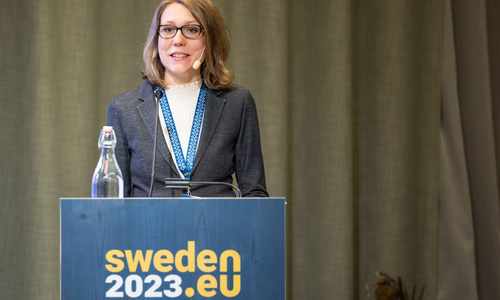
    EuropaBio Industrial Biotechnology Director Agnes Borg took part in the Swedish EU Council Bioeconomy conference. She presented on the importance of food as a key part of the bioeconomy, and how industrial biotechnology can enable solutions and innovation in the food sector. For example, novel solutions for food ingredients can improve the resource efficiency of food production and preserve nature and biodiversity. Valorisation of byproducts as feedstocks bridges the circular economy and the bioeconomy. Finally, industrial biotechnology solutions also support the growing demand for sustainable proteins, a key component of sustainable food systems.

    The session also included a panel discussion which explored the opportunities and challenges of the bioeconomy, how bioeconomy drives market development and new business models, key policy changes and research and innovation questions for the development and scale up of the bioeconomy.

    Watch the recording of the session here.

    Conference web page: https://swedish-presidency.consilium.europa.eu/en/events/conference-on-bioeconomy-27-282/

    Share
    Communications Team
    Communications Team

    Related posts

    29/05/2026

    The Luxembourg Institute of Science and Technology joins EuropaBio: Advancing Applied Biotechnology in Europe


    Read more
    26/05/2026

    EuropaBio Position on the Food and Feed SafetyOmnibus (May 2026)


    Read more
    18/05/2026

    Biodefence & Biosecurity in focus for EuropaBio with dedicated Task Force


    Read more

    Important links

    • The Luxembourg Institute of Science and Technology joins EuropaBio: Advancing Applied Biotechnology in Europe
    • EuropaBio Position on the Food and Feed SafetyOmnibus (May 2026)

    Categories in our Newsroom

    EBIO-white

    EuropaBio represents corporate and associate members across sectors, plus national and regional biotechnology associations which, in turn, represent over 5000 biotech companies, 4600 out of them are SMEs.

    Contact us

    Extra links

    Members
    Staff
    Privacy policy
    Legal & cookies
    Events
    Newsroom

    Become a member

    Media pack

    © 2026 Europabio. All Rights Reserved. Designed by EYAS
    Become a member

    Vitamin B2

    The biomanufacturing of Vitamin B2 led to the reduction of 75% of fossil raw materials and 50% operating costs, compared to the chemical process. Vitamin B2 is used in the food, feed or healthcare sectors.

    Insulin

    Insulin is one of the most widely known biopharmaceutical. Biotechnology revolutionised its manufacturing process and led to the development of new types of insulin through r-DNA technology.

    Detergents

    Enzymes and biosurfactancts are alternative ingredients that improve the performance of detergents, while leading to water and energy savings and reductions in CO2 emissions and water toxicity.

    Clothes

    Clothes made from alternative fibres produced by microorganisms can be 8x stronger than steel, 100% recyclable, biodegradable and replace fossil-fuel based or resource-intensive textiles.

    Algal Omega 3

    Algal Omega-3 is an innovative feed product for aquaculture. It reduces the impact on climate change by 30-40% compared to fish oil and saves 60 tons of wild fish for every ton of Algal Omega-3 used.

    Cheese

    Cheese is a vegetarian product thanks to biotechnology. Biotechnology is also essential to produce lactose- or cholesterol-free cheese, as well as alternative proteins.